In short
- AI can find patterns, read text at scale and act fast. It cannot know the future.
- Short-term price moves are mostly noise; edges that exist are small and fade once copied.
- Anyone claiming high, steady prediction accuracy should be asked for verified, live results.
- Use AI to explain and to filter, and keep the decision with you.
The short answer
Not reliably, and not in the way it is sold. AI can raise the odds slightly in specific, narrow situations, mostly for large firms with expensive data, fast systems and low costs. It cannot tell you where a stock will close next week with any certainty, because prices react to information that does not exist yet.
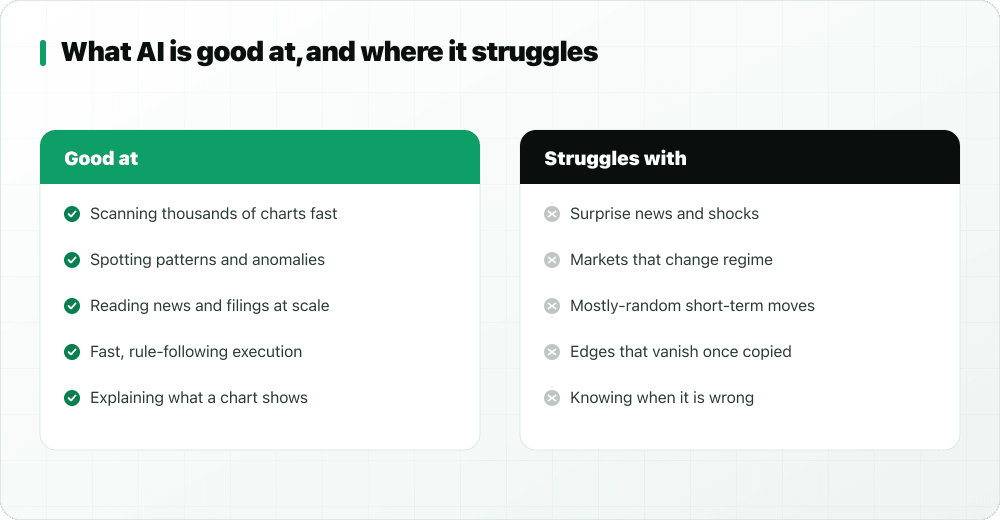
What AI is genuinely good at
- Scale. Scanning thousands of stocks for a pattern in seconds.
- Reading. Summarising earnings calls, filings and headlines faster than any person.
- Spotting the unusual. Flagging volume or price behaviour that is far from normal.
- Execution. Placing large orders in small pieces to reduce impact.
- Explaining. Describing what a chart shows in plain language.
Why prediction is so hard
- Noise. Over minutes and days, most price movement is close to random. A model trained on noise learns noise.
- The future is new. Elections, wars, rate decisions and surprise results are not in yesterday's data.
- Markets adapt. When an edge is found and traded, prices adjust and the edge shrinks.
- Regimes change. Patterns from a calm bull market can fail in a volatile one.
- Accuracy is not profit. A model can be "right" 60% of the time and still lose money if its losses are larger than its wins, or after fees.
How to use AI tools sensibly
- Use AI to explain (what is this indicator saying?) and to filter (what is moving unusually?).
- Turn any idea into rules you can see and test them on past data.
- Practise with virtual money before real money.
- Keep risk rules (stop-loss, position size) no matter how confident a tool sounds.
How Lumi is designed
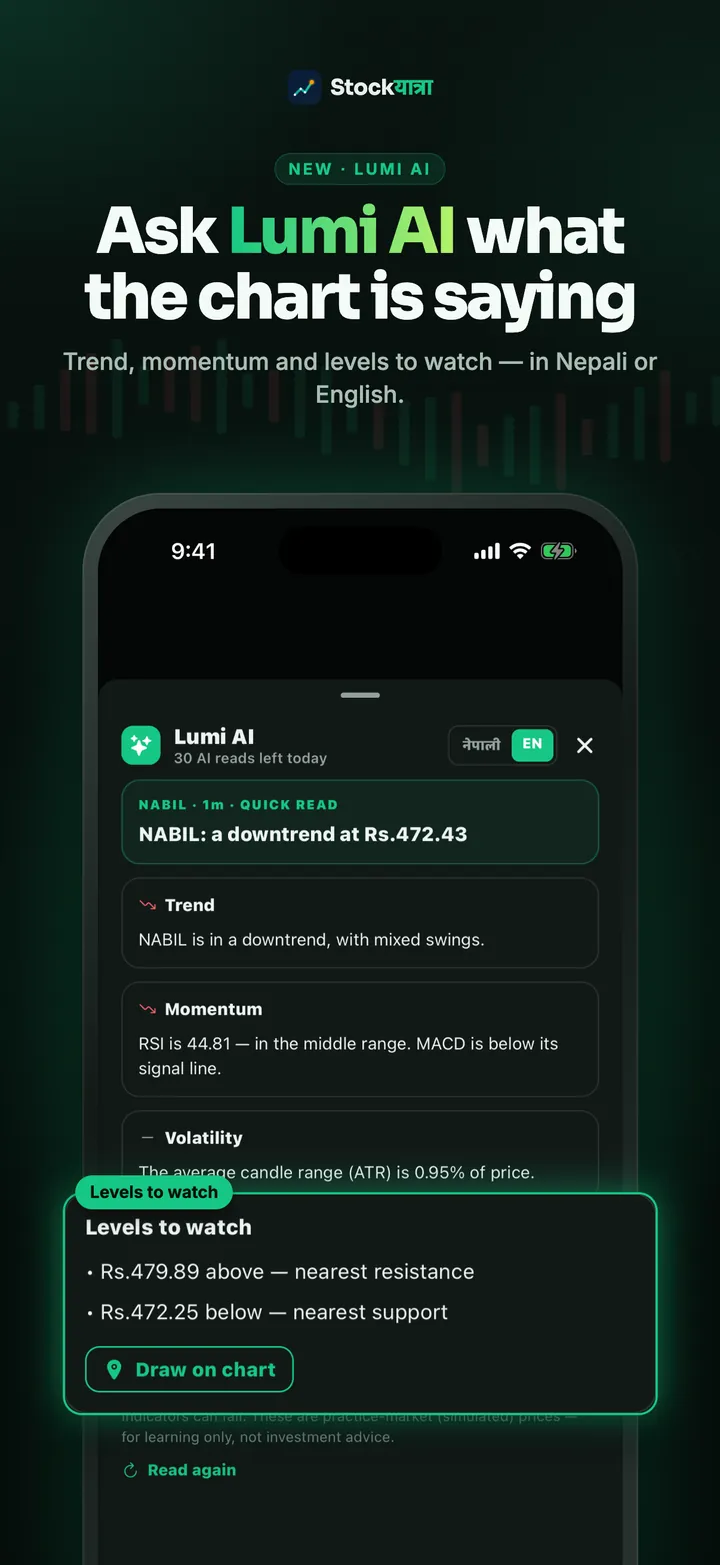
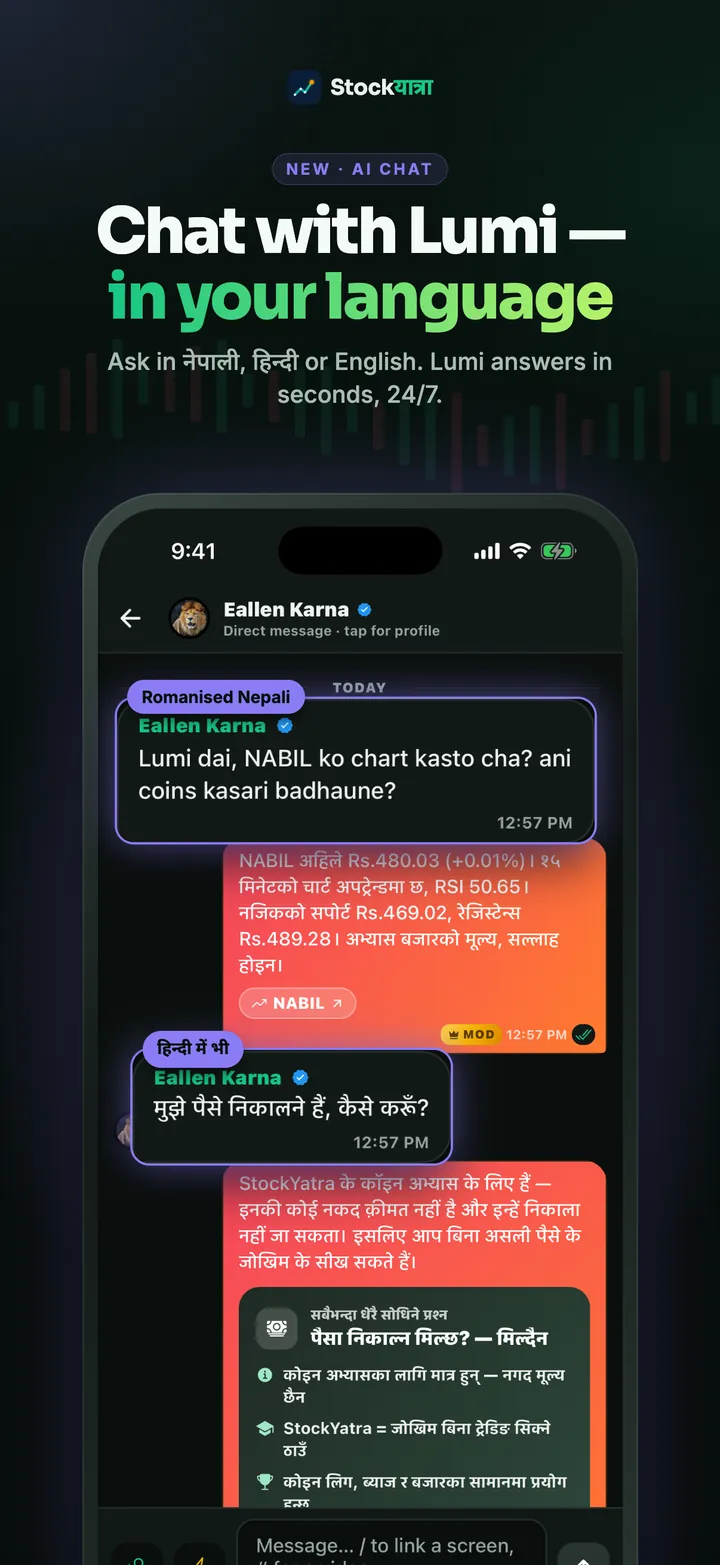
StockYatra's AI assistant, Lumi, is built to explain rather than predict. Ask it about a chart and it describes the trend, momentum and levels other traders watch, in English, Nepali or Hindi, and it does not tell you what to buy. If you want to test an idea, Pro Chart lets you write it as rules and backtest it, with every losing trade on show.
Key takeaways
- AI helps with speed, scale, reading and explaining.
- It cannot reliably predict short-term prices.
- Judge tools by live, after-cost results and drawdowns, not "accuracy".
- Turn ideas into visible rules and practise before risking money.
Learn with an AI that explains
StockYatra is a free practice app for Nepal (NEPSE), India (NSE) and US stocks. Test 41 transparent strategies, write your own rules or Pine Script, and backtest them on the chart with virtual coins. Nothing is hidden and nothing is real money.
The black box AI series
- What is black box AI in trading?
- SEBI rules: white box vs black box algos
- AI trading bot scams: 10 red flags
- Black box or white box: where beginners should start
- Unusual volume, options flow and dark pools, explained
- Black box AI trading: the one-page guide
- Pro Chart: 41 strategies with every rule shown
StockYatra is an education app, not a broker, adviser or research analyst. Nothing here is a recommendation to buy or sell any security or to use any trading product. Rules and dates are summarised for learning; check the regulator's and your broker's current notices before acting. Practice prices are simulated and coins are virtual.