Stop-Loss Explained: How to Protect Every Trade
A stop-loss automatically exits a trade to cap your loss. Learn what it is, how to place one sensibly, common mistakes, and why every trade needs one.
StockYatra Team1 Aug 2026
Older guides from the StockYatra blog. Read, then practise it free with virtual coins.
A stop-loss automatically exits a trade to cap your loss. Learn what it is, how to place one sensibly, common mistakes, and why every trade needs one.

What makes a great trading simulator, and why StockYatra stands out for Asian markets — live-simulated NEPSE and Indian prices, real order mechanics and courses.
The NIFTY 50 tracks 50 of India’s largest companies on the NSE. Learn what it is, how it’s calculated, what moves it, and how to invest in it.
Moving averages smooth price into a trend line. Learn SMA vs EMA, common periods like the 50 and 200-day, and how crossovers signal trend changes.
Overwhelmed by choice? This beginner framework for picking stocks covers understanding the business, checking financial health, valuation, trend and risk.
Fundamental analysis asks what to buy; technical analysis asks when. Learn how each works, their pros and cons, and how traders combine both.
Your biggest opponent in trading is you. Learn how fear and greed sabotage decisions, the emotion cycle of markets, and practical ways to trade with a clear head.
Most new traders lose money to the same handful of mistakes — no stop-loss, oversizing, revenge trading and more. Learn the 12 biggest and how to avoid each.
Leverage lets you control a larger position with less capital — multiplying gains and losses alike. Learn how margin works and how to use leverage safely.
Market, limit, stop-loss and stop-limit orders each do a different job. Learn when to use each order type to control your price and manage risk.

A bull market rises, a bear market falls. Learn what causes each, how they feel, and how traders and investors adapt their approach to both.
Dividends are a share of company profits paid to shareholders. Learn how dividend investing works, key terms like yield and payout ratio, and its pros and cons.

An IPO is a company’s first sale of shares to the public. Learn how IPOs work, how to apply (including via Mero Share in Nepal), and how to evaluate one.
A Demat account holds your shares electronically. Learn what it is, why you need one, the documents required, and how to open a Demat account step by step.
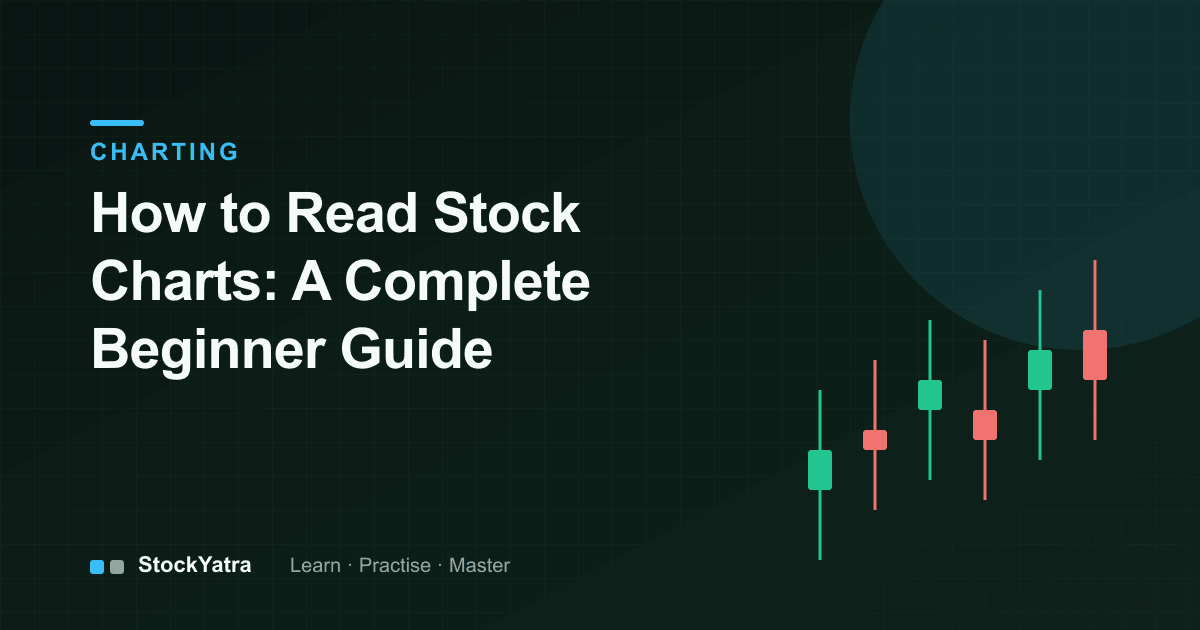
Learn how to read stock charts step by step: price and time axes, candlesticks, timeframes, volume, trend, and support & resistance — with clear diagrams.
A beginner’s guide to the three most popular technical indicators — moving averages, RSI and MACD. Learn what each measures and how to use them.
A trading journal turns random trades into a feedback loop that makes you better. Learn what to record, how to review it, and templates to start today.
Meet the major stock indices of Asia — NEPSE, NIFTY 50, SENSEX, Nikkei, Hang Seng and more. Learn what each measures and why indices matter.
Intraday and swing trading demand different time, temperament and skills. Compare them side by side and find the trading style that fits your life.
Support and resistance are the most useful levels on any chart. Learn how to spot them, why they form, and how to trade bounces and breakouts with confidence.
A behind-the-scenes look at the StockYatra paper-trading simulator: live-simulated NEPSE and Indian prices, virtual coins, real order mechanics, leaderboards and courses.
Great traders survive first and profit second. These 10 practical risk management rules — position sizing, stop-losses, the 2% rule and more — protect your capital.
A plain-English introduction to how the stock market works: what a share is, how exchanges and indices work, and how prices are set. Perfect for absolute beginners.
Paper and real trading differ most in one thing: emotion. Learn the real differences and the checklist that tells you when you’re ready to trade real money.