Two traders can follow the same strategy and get opposite results, because the hardest part of trading isn’t the chart — it’s the trader.
The two enemies: fear and greed
Fear makes you cut winners early and freeze at good entries. Greed makes you oversize, chase and hold losers hoping they come back.
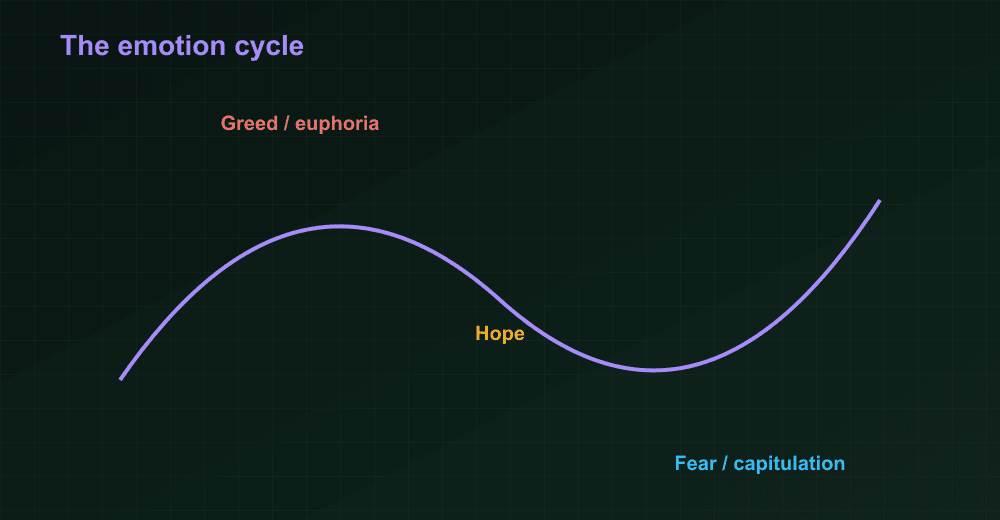
Key idea: The market is a machine for transferring money from the impatient to the patient. Emotional control is your edge.
Practical fixes
- Decide before you enter — write your stop and target so emotion can’t rewrite them.
- Size small enough to sleep. If a position keeps you up, it’s too big.
- Journal your emotions, not just your trades.
- Take breaks after a big win or loss.
Why a simulator helps
Practising on a simulator builds the habits and rules first, so when real money raises the emotional stakes, your process is already automatic.
Key takeaways
- Psychology, not stock-picking, decides most outcomes.
- Fear cuts winners; greed holds losers.
- Pre-decide stops/targets so emotion can’t override them.
- Size small enough to stay calm.
Practise this free on StockYatra
Open a free account, get 10,000 virtual coins and trade live-simulated NEPSE & Indian markets with zero real-money risk.