An order is your instruction to buy or sell. The type you pick trades off price control against certainty of execution.
Market order
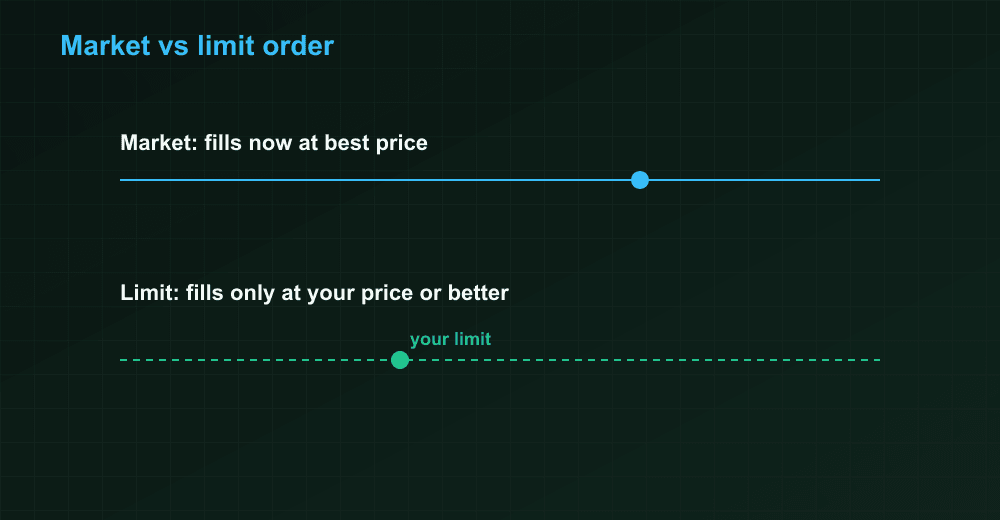
Fills immediately at the best available price. Fast, but you don’t control the exact price — risky in fast or thin markets.
Limit order
Fills only at your chosen price or better. You control the price but it may not execute at all.
Stop-loss and stop-limit
A stop-loss triggers a market order once price hits your level — used to cap losses. A stop-limit triggers a limit order instead, giving price control but risking non-execution.
Key idea: Careful traders favour limit orders to know exactly what they’ll pay, and always attach a stop-loss to cap risk.
Key takeaways
- Market = speed, no price control.
- Limit = price control, no fill guarantee.
- Stop-loss caps losses automatically.
- Match the order type to your priority: price or speed.
Practise this free on StockYatra
Open a free account, get 10,000 virtual coins and trade live-simulated NEPSE & Indian markets with zero real-money risk.