
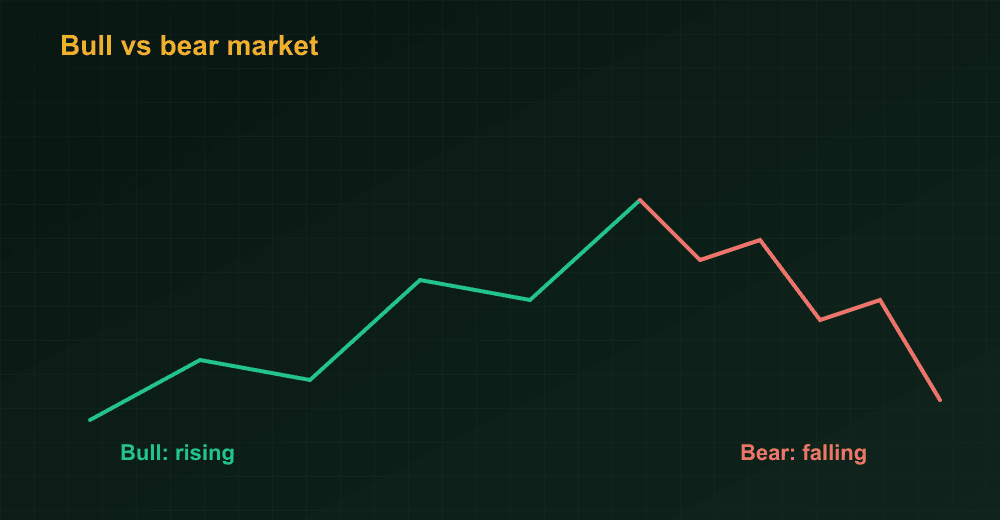
A bull market is a sustained rise in prices and optimism; a bear market is a sustained fall, often defined as a 20%+ drop from highs.
What drives them
Bull markets ride growth, low interest rates and confidence. Bear markets follow recessions, rate hikes, or shocks that trigger fear and selling.
Key idea: Markets move in cycles. No bull market lasts forever, and no bear market does either.
How to adapt
- In a bull market: trends persist; pullbacks are often buying chances — but don’t get complacent.
- In a bear market: rallies can fail; capital preservation and smaller size matter most.
The beginner’s edge
You don’t have to predict the cycle. Manage risk on every trade and you survive both — which is exactly what practising on a simulator teaches.
Key takeaways
- Bull = rising/optimism; bear = falling/fear (20%+ drop).
- Cycles are driven by growth, rates and sentiment.
- Adapt size and expectations to the environment.
- Risk management carries you through both.
Practise this free on StockYatra
Open a free account, get 10,000 virtual coins and trade live-simulated NEPSE & Indian markets with zero real-money risk.